
ICMR-National Institute of Health Research
New Pali Road, Jodhpur
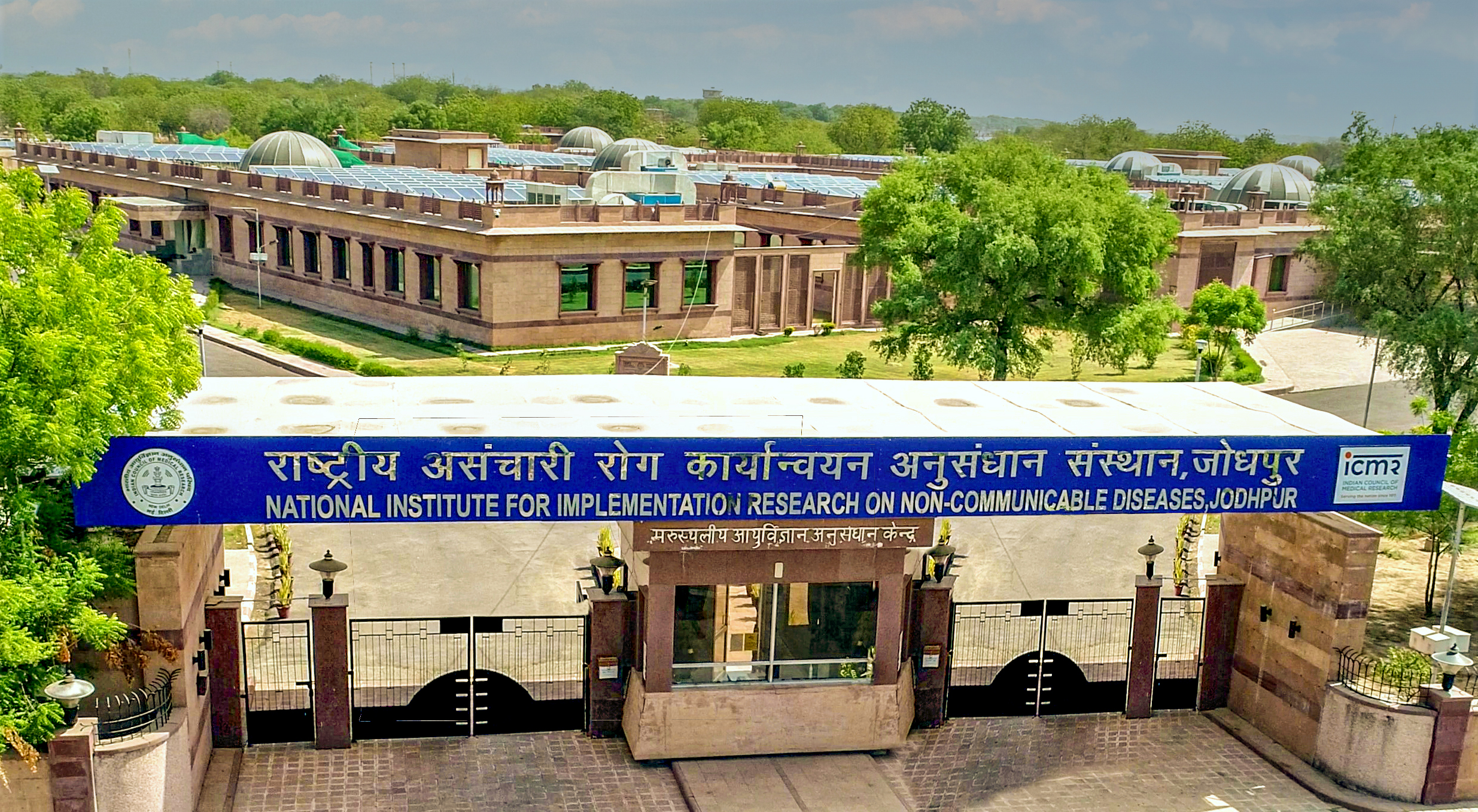
The National Institute of Health Research (NIHR), located in Jodhpur, was originally established on 27 June 1984 as the Desert Medicine Research Centre (DMRC). It was later renamed the National Institute for Implementation Research on Non-Communicable Diseases (NIIRNCD) on 7 December 2019, redesignated as NIHR on 29 April 2026.
The Institute houses state-of-the-art facilities for conducting basic laboratory-based research in microbiology, biochemistry, and vector biology. It is also actively strengthening its capacity and workforce to advance implementation research on non-communicable diseases (NCDs).
Currently, NIHR comprises a team of dedicated scientists and technical experts, supported by administrative and operational staff. The Institute’s key focus areas include cardiovascular diseases, chronic respiratory diseases, environmental health, nutritional disorders, cancers, injury and trauma, mental health conditions, including substance use disorders, genetic disorders, and other NCDs of public health significance in India.
NIHR aims to generate high-impact implementation research across these domains, build capacity through specialized training programmes, and develop effective behaviour change communication strategies to address NCD risk factors. The Institute welcomes collaboration with academic and research institutions, as well as individual researchers committed to advancing public health in alignment with national health priorities.
Vision
To be the leader in conducting implementation research for prevention and control of non communicable diseases
Mission
To equip all health care workers in the country with necessary skills and competencies, that they can contribute to prevention, control and treatment of non communicable diseases
Goal
To reduce the burden of non communicable diseases and improve the quality of life of people suffering from NCDs
Objective
- To conduct implementation research in non-communicable diseases of public health significance
- To develop human resources and build capacities for strengthening implementation research capabilities in other institutions
- To develop information, education and communication (IEC) strategies and tools for prevention, control and treatment of NCDs
- To provide recommendations to policy makers and planners in framing policies for prevention, control and treatment of NCDs
- To collaborate with other institutions, agencies and individuals for developing innovative solutions for NCDs’ prevention, control and treatment
- To create an interface between communicable diseases and non-Communicable diseases.